4 min read
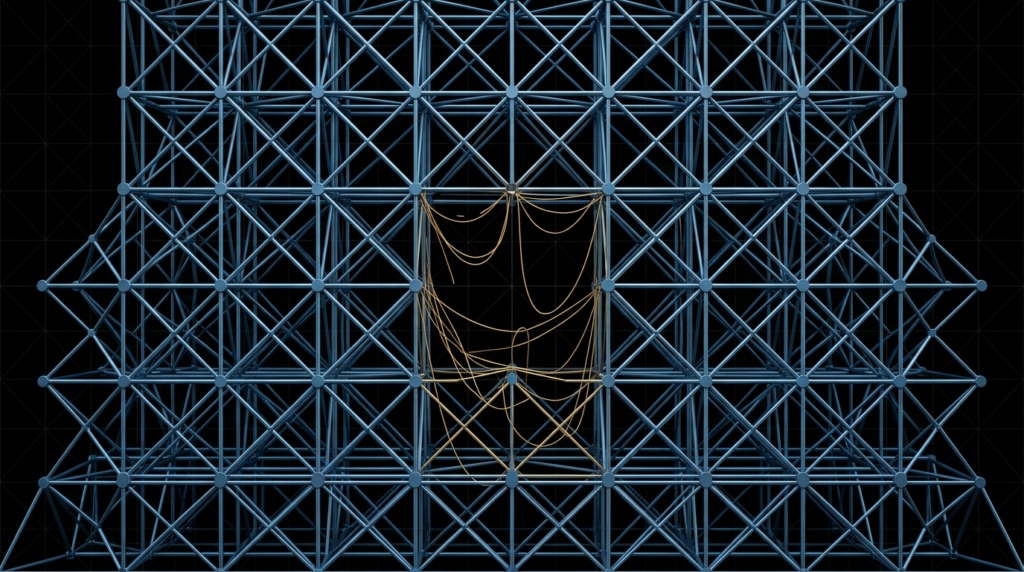
You prepared for three days before your vacation — building documentation, briefing colleagues, pre-solving problems that hadn’t happened yet. You left. On day two, the messages started. “Quick question.” “Just wanted to check.” “When you get a chance.” You returned to a backlog that looked like nobody touched anything while you were gone. When work falls apart when you take time off, the vacation didn’t cause the breakdown. It revealed the architecture that was already failing — and confirmed that you are the Load-Bearing Person™ at the center of it. Your presence wasn’t keeping things running. It was keeping the fragility hidden.
What Absence Reveals
A well-designed operation absorbs absence. It distributes load, builds redundancy, and functions — imperfectly, perhaps, but it functions — when any single person is removed. An operation that collapses when you take a week off was never designed to function without you. It was designed around you.
You know exactly how this plays out. You prepare for three days before your vacation — building documentation, briefing colleagues, pre-solving problems that haven’t happened yet. You leave. On day two, the messages start. “Quick question.” “Just wanted to check.” “When you get a chance.” You return to a backlog that looks like nobody touched anything while you were gone. Not because they’re incapable. Because the operation hadn’t required them to carry what you carry. It was never built to. It was built on you.
The three days of preparation you did before leaving? That’s the diagnostic. A healthy operation doesn’t require its members to pre-solve the future before taking time off. That preparation cost is itself the evidence of Structural Debt™ — design failures that were never resolved at the structural level, deferred instead into the personal capacity of the person willing to absorb them.
When work falls apart when you take time off, the collapse isn’t revealing weakness in your team. It’s revealing the absence of something that was never built.
The Fragility You Maintained
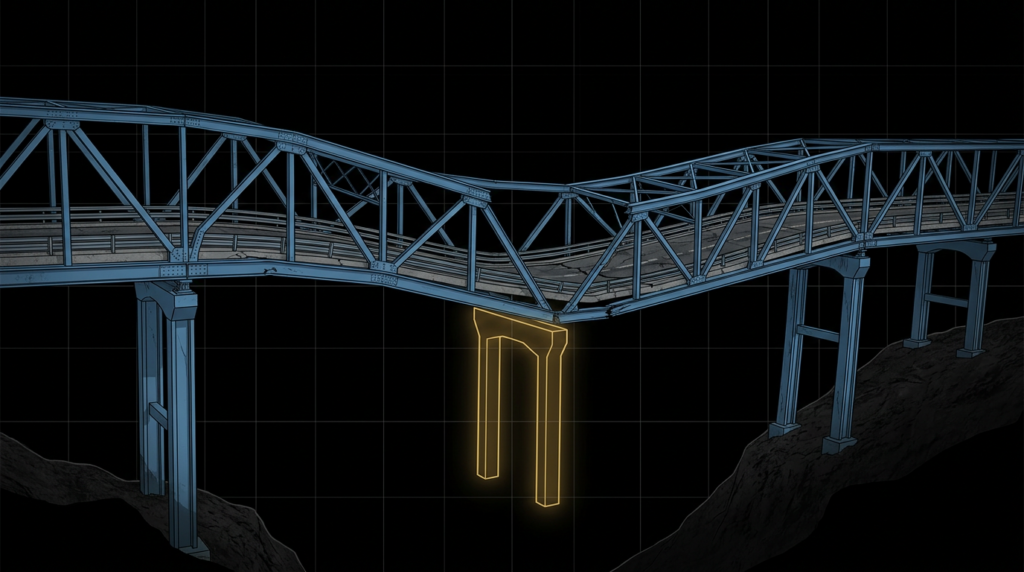
You’ve been papering over a design flaw with your own availability. Every time you caught something before it fell, you prevented the operation from experiencing the consequence of its own fragility. Every time you were available to answer the question nobody else could, you prevented the operation from developing someone else who could.
The instinct is to interpret the breakdown as a people issue — “they need more training,” “they need more clarity.” But most of the time, the root is architectural. The operation was never required to function independently. It adapted to your presence. Not to a framework. When that pattern runs for months or years, the operation’s independent capacity atrophies at the same rate your indispensability grows. The Load-Bearing Person™ doesn’t just hold the operation up — they actively prevent it from developing the structural support that would make them unnecessary. That’s the trap: being essential and being trapped are the same condition, viewed from different angles. Download the Urgency Reset Framework™ → HiddenCostOfSuccess.com/free/
↳ Your vacation didn’t break anything. It showed you what was already broken — and what your presence was hiding.
The Inversion
Here’s what most people in this position never reach: the breakdown during your absence isn’t a problem to be solved when you return. It’s the most valuable diagnostic you’ll ever receive. It shows you precisely where the operation lacks independent capacity, precisely which decisions have no backup, precisely which processes exist only in your head.
Your instinct is to come back and fix everything — re-stabilize, ensure it never breaks again. But that instinct is the behavior that created the fragility in the first place. The operation doesn’t need you to return and hold it together. It needs you to return and let the fractures inform where the real building has to happen. The collapse is the blueprint. The Load-Bearing Person™ who uses absence data to design redundancy is no longer load-bearing — they’re building a structure that can stand on its own. That’s the only exit from this position that doesn’t require you to be present every day for the rest of your career.
WHAT TO DO WITH THIS If this feels familiar, you’re likely dealing with misallocated responsibility — not a time problem. You can start to see it more clearly using the Urgency Reset Framework™. Download the Urgency Reset Framework™ → HiddenCostOfSuccess.com/free/
Part of the mechanism: Responsibility Drift.