4 min read

The “urgent” Slack message at 9 AM consumed your entire morning. The strategic document that would actually change your trajectory has been sitting in your drafts for three weeks. Both real. One felt immediate. The other feels important. You know which one won. Understanding urgency vs importance at work isn’t a productivity framework. It’s the difference between spending your career advancing what matters and spending it responding to what’s loudest. That difference has a name: Loudness Bias™ — the systematic tendency to address what is most visible rather than most valuable, because urgency amplifies signal strength without amplifying signal worth.
Why the Faster Signal Always Wins
Urgency is easy to detect. It has a tone, a speed, a pressure attached to it. It shows up quickly, feels immediate, demands attention. Importance doesn’t behave like that. It’s quieter. Less visible. Often slower to reveal itself. It doesn’t announce — it requires recognition. And recognition takes effort.
The brain is designed to respond faster than it evaluates. When something feels urgent, it gets processed first — before it gets understood, before it gets compared, before it gets questioned. Urgency and importance collapse into one signal not because one deserves priority, but because one arrives faster. And the faster signal gets priority every time. This is Loudness Bias™ at the neural level: the processing shortcut that treats amplitude as a proxy for value, because evaluating actual value requires the kind of deliberate pause that urgency is specifically designed to eliminate.
A request comes in marked “urgent.” It moves to the top. Not because it changes outcomes — because it changes perception. It feels closer, more immediate, more necessary. That feeling overrides everything else, even when other work carries more weight.
You’ve lived this exact scenario. The “urgent” Slack message at 9 AM that consumed your morning. The strategic document that’s been sitting in your drafts for three weeks. Both real. One felt immediate. The other feels important. You know which one won.
Urgency vs importance at work: urgency captures attention without justification. Importance requires justification. In fast environments, the signal that requires less effort always wins.
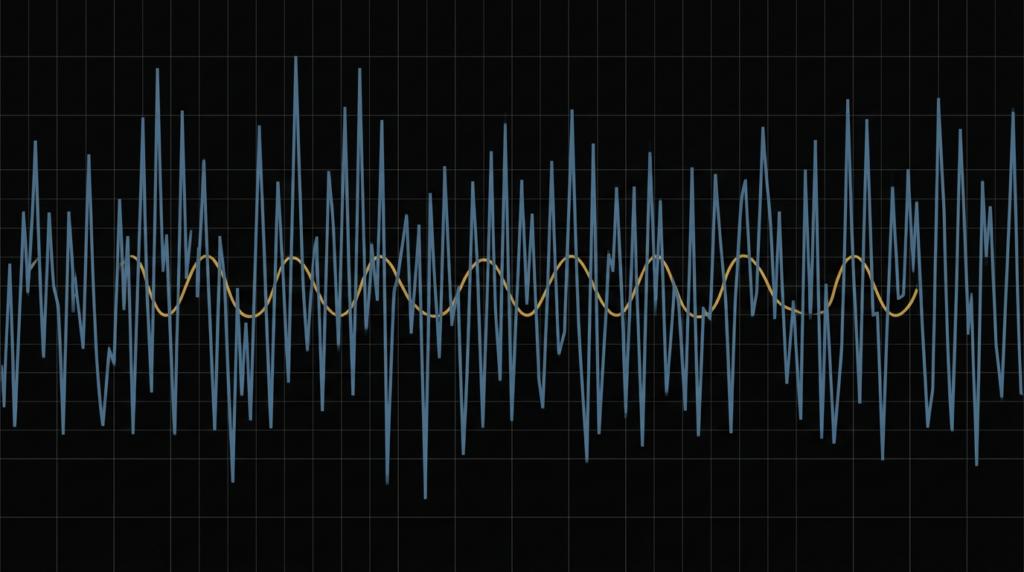
The Hidden Cost of Urgency-Driven Action
Each urgent action displaces something less urgent. And what gets displaced is rarely unimportant. It’s just less visible, less immediate, less loud. Important work gets delayed — not because it’s ignored, but because it doesn’t compete well. It doesn’t signal. It doesn’t demand. It waits. And waiting, in an operation driven by urgency, becomes permanent disadvantage.
You start to feel it: the sense that you’re busy but not advancing, active but not moving anything meaningful forward. That’s not a productivity issue. It’s a signal interpretation issue. Loudness Bias™ has replaced your evaluation system with a volume meter. You’re responding to urgency as if it represents importance. But urgency measures immediacy, not value. The two feel identical — which is exactly the problem.
This is especially corrosive in environments where urgency is overused — everything marked high priority, everything treated as time-sensitive, everything arriving with the same tone. When that happens, urgency loses its meaning entirely. If everything is urgent, nothing is being differentiated. And without differentiation, prioritization collapses. You don’t choose between options. You process them in order of arrival. The Urgency Loop™ running at full speed, with Loudness Bias™ ensuring that the loudest signal in the loop always wins the next cycle. Download the Urgency Reset Framework™ → HiddenCostOfSuccess.com/free/
↳ Urgency doesn’t guide direction. It overrides it. And every day you follow it, the things that actually matter fall one day further behind.
The Personal Cost
Somewhere on your task list — or more likely, not on your task list at all — is the thing that would actually change your trajectory. The conversation you’ve been meaning to have. The project that would demonstrate strategic thinking. The boundary that would restructure how work reaches you. It’s been there for weeks. Maybe months. It doesn’t feel urgent. So it waits.
And while it waits, you respond to fourteen things that feel urgent and matter less. At the end of the day, you’re too depleted to give the important thing the attention it deserves. Loudness Bias™ doesn’t just consume your hours. It consumes your best hours — the ones at the start of the day, before the signals arrive, before the loop accelerates. By the time you’ve cleared the urgent noise, the quiet important work has nothing left to run on. That’s not a time problem. That’s a signal problem. And every day the signal wins, the important thing gets further away. It won’t wait forever.
WHAT TO DO WITH THIS If this feels familiar, you’re likely dealing with misallocated responsibility — not a time problem. You can start to see it more clearly using the Urgency Reset Framework™. Download the Urgency Reset Framework™ → HiddenCostOfSuccess.com/free/
Part of the mechanism: Urgency Drift.