4 min read
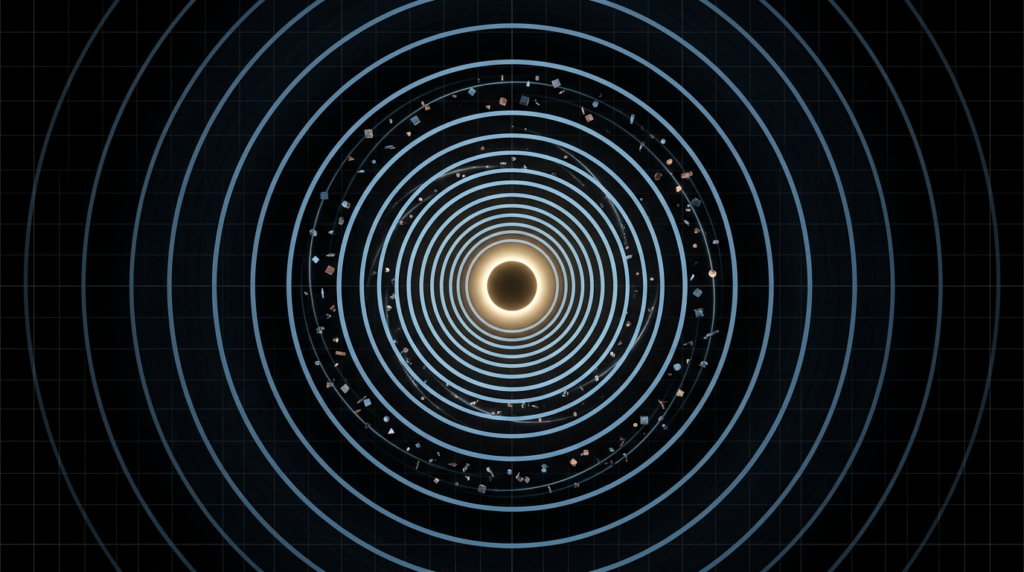
You didn’t apply for this role. There was no posting, no interview, no conversation where someone said “you’re now responsible for everything ambiguous.” But if you’re asking why does everything end up on me at work, the answer has been operating in the background for years: Competence Gravity™ — the force by which demonstrated capability pulls unowned work toward whoever resolved it last. You’ve been the heaviest object in the room long enough that everything orbits you by default. Not because anyone decided that. Because gravity doesn’t require a decision.
The Gravity of Competence
Capability attracts load. In any group where task ownership is loosely defined, the people who resolve problems fastest become the people to whom problems are directed. Not by policy. Not by role definition. By behavioral economics — the group optimizes for least resistance, and your competence is the lowest-friction path.
This happens before anyone makes a conscious decision. You respond to a question others ignore. You handle a situation that could have waited. You finish something that was technically someone else’s. And each of these moments registers in the organizational memory as a signal: this person resolves things. Route accordingly.
The moment you probably remember most clearly: you solved someone’s problem because it was blocking your own work. A one-time favor. Six months later, you’re the unofficial owner of that entire process, and nobody remembers it was supposed to be temporary. That’s Competence Gravity™ completing its first full cycle — from capability demonstration, to routing preference, to assumed permanent ownership. Three steps. No conversation at any of them.
Competence doesn’t just get recognized. It gets absorbed. And the absorption starts before you notice it’s happening.
The result is an accumulation that’s invisible until it’s crushing. No single item is unreasonable. But the total — the compound weight of being the default answer to every ambiguous question — is unsustainable. And by the time you see the total, the dynamic has been running long enough that interrupting it feels like failing.
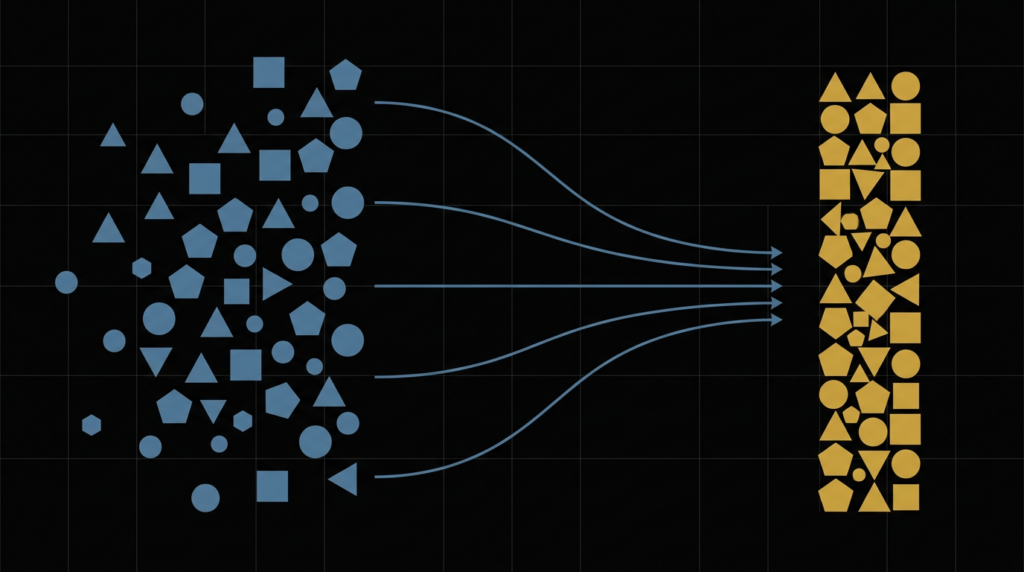
The progression from dispersed to concentrated is smooth and inevitable
How Load Finds You
The mechanism has three stages. First, you demonstrate capability in a visible moment. Second, the organization files that demonstration as a routing preference. Third, future tasks that match the profile get directed your way — not by assignment, but by assumption.
The third stage is where the damage accumulates, because it operates below conscious awareness. Nobody says “let’s give this to you.” They just do.
Why does everything end up on me at work? Because Competence Gravity™ doesn’t have an off switch. Because the operational environment treats demonstrated competence as an open invitation. And because you’ve never formally closed that invitation, the routing continues — quietly, indefinitely, at a volume that compounds every quarter.
You didn’t create the gravity. But your competence did. And gravity doesn’t negotiate.
What the Organization Optimizes For
The reframe is precise: this isn’t about working harder. It’s about how responsibility flows in environments where ownership is ambiguous. Competence creates gravitational pull. Load follows the pull. And the pull doesn’t weaken just because the person at the center is already saturated. The organization doesn’t optimize for fairness. It optimizes for resolution speed.
It’s the part that sits with you at night. Not the meetings, not the deadlines, not even the volume. It’s the quiet recognition that you’ve been absorbing things for so long that you can’t remember what your actual scope was supposed to be. The original role disappeared under layers of accumulated weight. And now, when you try to imagine putting any of it down, you feel something close to vertigo — because you’ve been holding it so long that it feels like part of who you are.
That’s not dedication. That’s erosion. The difference between the two is what you’re actually working with — and only one of them is a choice.
What to Do With This
Competence Gravity™ doesn’t reverse through effort. It reverses through interruption — of the signals that invite more routing, of the availability that makes you the path of least resistance, of the silence that reads as acceptance.
That interruption starts with seeing the dynamic clearly. Not blaming the organization, not blaming yourself — just naming the mechanism accurately. Once you can see it, you can begin to work with it instead of against yourself.
If this pattern feels familiar, the Urgency Reset Framework is a one-page diagnostic that helps you identify where the gravitational pull is strongest — before you try to address it.
Download the Urgency Reset Framework™ → HiddenCostOfSuccess.com/free/
Part of the mechanism: Responsibility Drift.