7 min read

You’ve read all of it. The drift. The gravity. The loop. The tax. The debt. Each article named something you recognized. Maybe something you’d felt for years without being able to say what it was. That recognition is the point. Because you can’t correct what you can’t name. And you’ve been carrying something that had no name — until now.
This final article isn’t another pattern to recognize. It’s the frame that holds all of them.
What You Were Never Told About Success
Here is what nobody explains to high performers, and what the entire preceding series has been building toward: the behaviors that make you successful are the same behaviors that make you structurally exploitable.
Competence attracts load. Reliability invites extraction. Clarity of thought generates fast, wrong answers under pressure. Consistency converts into obligation. Capability converts into dependency. Every trait that makes you effective in the moment makes you more expensive to operate over time — not because something went wrong, but because something worked too well.
This is The Misallocation Effect™: the compounding condition in which capable, reliable people become the structural solution to organizational design failures they didn’t create, aren’t responsible for, and were never asked to consent to. Not burnout. Not overwork. Misallocation. The distinction is the entire diagnosis — and it changes everything about what the correction looks like.
Burnout implies you worked too hard. Misallocation means the work was directed to the wrong place. The fix for burnout is rest. The fix for misallocation is redirection. And those are different interventions, aimed at different levels, with different timelines and different leverage points.
The Misallocation Effect™ is not a personal failure. It is a structural outcome — the predictable result of being capable inside a system that contains unowned problems.
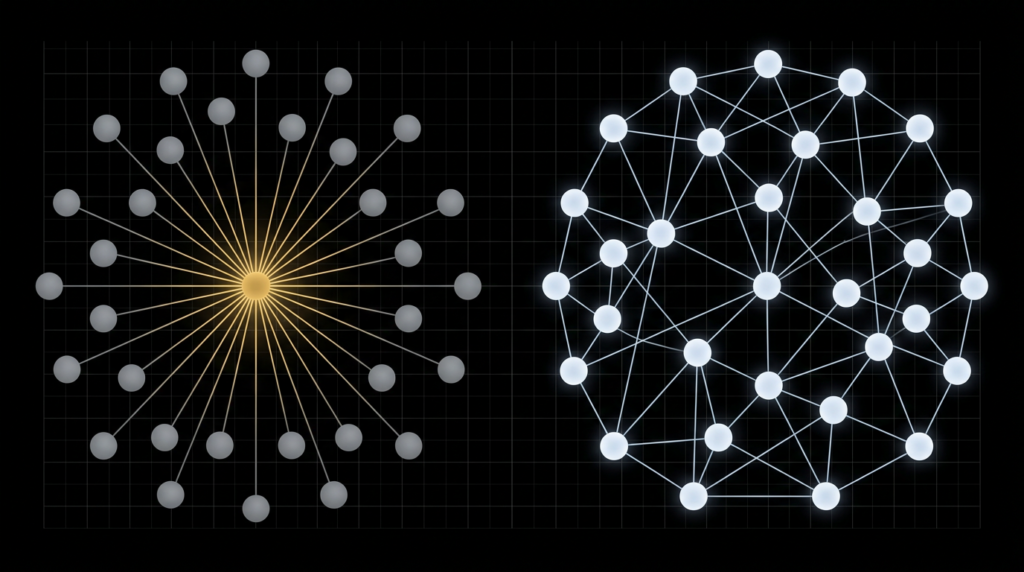
The Ten Mechanisms — Named
Across the preceding twenty-nine articles, ten mechanisms were exposed. Each one was already operating in your environment before you had a name for it. Name them now.
Competence Gravity™ is the force by which demonstrated capability pulls unowned work toward whoever resolved it last. Not assigned — attracted. The more you solve, the stronger the pull. It doesn’t require malice. It doesn’t require awareness. It requires only that you keep solving, and the environment keep routing.
The Reliability Tax™ is the hidden cost extracted from those who are dependable. Every consistent delivery reconfigures the environment to send more. Reliability isn’t rewarded — it’s consumed. And the consumption compounds silently, one assumption at a time, until the person paying the tax cannot remember a version of their role that didn’t include it.
Silent Assignment™ is the process by which ownership transfers without a conversation. No handoff. No agreement. Just accumulated response interpreted as standing obligation. The agreement was written in behavior, not language. And behavioral agreements are the hardest kind to renegotiate, because there’s no document to point to and no moment to return to.
The Default Position™ is the role you hold not because you were appointed, but because you never refused it long enough for anyone to look elsewhere. It forms through the slow conversion of willingness into obligation — through competence, through availability, through the simple fact that you kept absorbing what nobody else would carry.
The Urgency Loop™ is the self-reinforcing cycle where responsiveness lowers the threshold for what feels urgent, which demands more responsiveness, which lowers the threshold further. Once running, the loop no longer requires external inputs to generate pressure. It runs on you — independent of what’s actually due, independent of what actually matters.
Loudness Bias™ is the systematic tendency to address what is most visible rather than most important. Urgency amplifies signal strength — not signal value. Attention is spent on volume, not significance. And the quieter, more important work waits indefinitely in the background, losing ground every day the loud signals win.
Pressure Diagnosis™ is the cognitive pattern where chronic overload causes the brain to generate fast, emotionally satisfying explanations rather than accurate ones. The diagnosis arrives before the analysis does. It feels like insight. It functions like a closed door. And the faster and more confident the diagnosis, the more likely it was generated by the need to reduce discomfort rather than by genuine examination.
Symptom Displacement™ is what happens when the actual problem shows up somewhere other than where it lives, and every intervention addresses the symptom while the source continues. Time management addresses the symptom. Productivity systems address the symptom. Boundaries address the symptom. The source — misallocated intake driven by structural failures — continues generating the next symptom on schedule.
Structural Debt™ is the accumulated weight of organizational design failures that were never resolved at the level where they were created, and so transferred downward until they landed on a person. It doesn’t appear on any balance sheet. It appears in Sunday evenings, in the 11 PM task that couldn’t wait, in the vacation that required three days of preparation to take.
The Load-Bearing Person™ is the individual around whom a system has structurally organized itself — not by design, but by default. Their presence conceals the fragility. Their absence reveals it. They are celebrated for holding the operation together, right up until the weight becomes unsustainable. And the celebration is part of what makes the trap invisible.
The Unified Frame
These ten mechanisms are not separate problems. They are facets of one condition.
Competence Gravity™ creates the initial pull. The Reliability Tax™ converts that pull into a recurring cost. Silent Assignment™ formalizes the cost as obligation without ever naming it. The Default Position™ crystallizes the obligation into identity. The Urgency Loop™ accelerates the whole system while preventing the pause that would allow any of it to be questioned. Loudness Bias™ ensures the important work — the architectural correction — never competes successfully for attention. Pressure Diagnosis™ closes the diagnostic loop prematurely, so the pattern gets misread as a volume problem rather than a structural one. Symptom Displacement™ ensures that every intervention treats the downstream effect while the upstream source continues. Structural Debt™ is what accumulates when all of the above run uncorrected. And the Load-Bearing Person™ is what you become when Structural Debt™ has been running long enough that the operation cannot imagine functioning without you.
Together, they constitute The Misallocation Effect™: the compounding condition where capable, reliable people become the structural solution to organizational design failures they didn’t create. Not through any single decision. Not through any single failure. Through the physics of competence operating inside systems that have no mechanism for redistribution.
↳ This is not a story about working too hard. It is a story about a capable person in a system that learned to organize itself around them — and never learned to stop.
What Changes When You Name It
The series began with a simple observation: work doesn’t get assigned. It moves. That observation is the entry point. This article is the destination.
Between those two points, the full architecture of The Misallocation Effect™ was exposed: ten mechanisms operating simultaneously, each reinforcing the others, all invisible until named. The naming is not academic. It is the prerequisite for correction.
You cannot return a responsibility that has no name. You cannot interrupt a loop you haven’t identified. You cannot redesign a system you believe is your personal failing. The first act of structural correction is structural recognition — seeing clearly that what you’ve been carrying is a design failure, not a character trait. That the weight was placed on you, not chosen by you. That the pattern is predictable, not personal.
The Misallocation Effect™ doesn’t resolve through effort. It resolves through interruption: of the signals that feed Competence Gravity™, of the assumptions that sustain the Reliability Tax™, of the silence that enables Silent Assignment™, of the availability that holds the Default Position™ in place.
That interruption is uncomfortable. The environment will resist it — not through malice, but through inertia. Systems configured around a person resist reconfiguration. The friction that follows is not evidence that something is wrong. It is confirmation that the structural change is real.
You are not overloaded. You are misallocated. And now you know the difference. Everything else follows from that.
WHAT TO DO WITH THIS The Urgency Reset Framework™ is the starting point — a one-page diagnostic for when urgency is overriding judgment. Download the Urgency Reset Framework™ → HiddenCostOfSuccess.com/free/